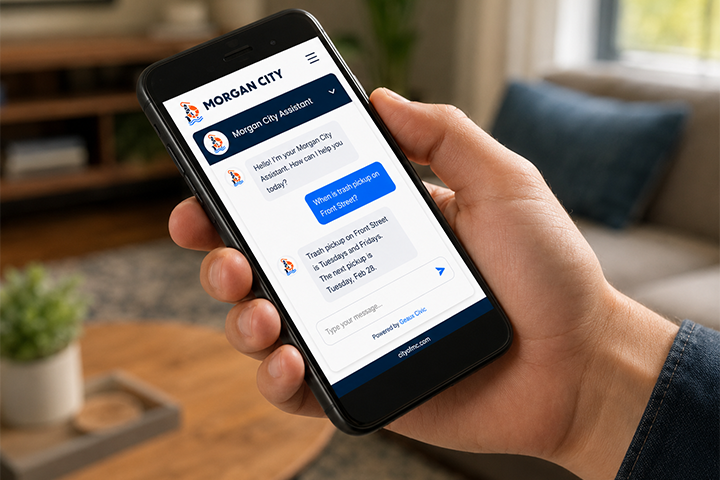
A complete civic platform (strategy, identity, messaging, and an integrated citizen engagement system) built for a Louisiana city of 12,000.
Request a Readiness Assessment
Morgan City didn't need a new logo. It needed an identity people could rally around, a message every department could deliver, and a way to run both without juggling vendors. Working under the Schola Designs and Geaux Systems brands, the team ran a multi-day workshop with 15 community leaders. Then they surveyed 2,331 people (residents, workers, business owners, visitors, parish neighbors) across seven distinct segments. The result was a civic platform: positioning, brand, messaging, and a citizen engagement layer, all connected. That model is now Geaux Civic, offered to cities nationwide.
Morgan City had ambition but no operating identity. The city logo was outdated and broke down at small sizes. The official motto, "Right in the Middle of Everywhere," said nothing about what made the city worth visiting, investing in, or moving to. There was no positioning, no shared language, no story any department could tell the same way twice.
Communication with residents ran through Facebook posts, the local newspaper, and the evening news. Marketing to anyone outside the city limits was effectively nonexistent. Every city form and application was paper, or at best a downloadable PDF that assumed every resident had a printer and the time to drop it off in person.
A new administration changed the trajectory. After serving as the lead strategist on the mayor's winning campaign, Schola was brought in to do for the city what the campaign had done for the candidate: build a clear identity, modernize how the city operated, and give Morgan City the infrastructure of a place that knew where it was going.
The engagement was built as one integrated system, delivered in four connected tracks. Each one fed the next. Nothing was built in isolation.
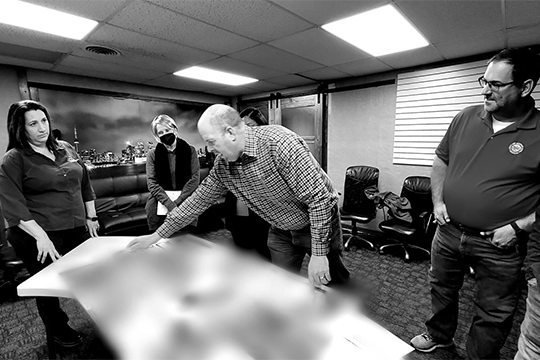
The work started in a room. Fifteen community leaders, multiple days, one job: figure out what Morgan City actually was, not what anyone wished it to be. From that workshop, the team built a citywide research effort across seven segments: current residents, people who work in Morgan City, past residents, St. Mary Parish residents, property owners, business owners, and visitors. 2,331 people answered. One finding cut through everything else. Residents and visitors didn't want a different Morgan City. They wanted the same Morgan City, updated.
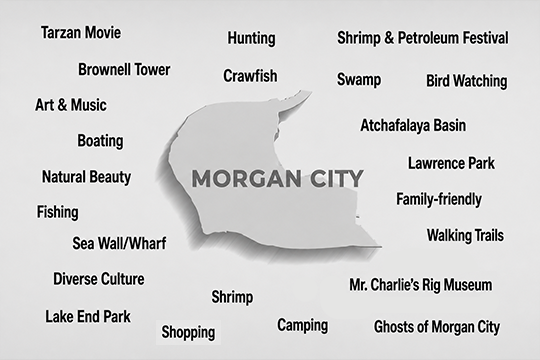
Out of the research came the messaging system: a core positioning statement, a public-facing slogan, and a narrative framework built to cascade across every city touchpoint. Out of dozens of community-named values (Atchafalaya, shrimp, family-friendly, diverse culture), four words carried the rest.
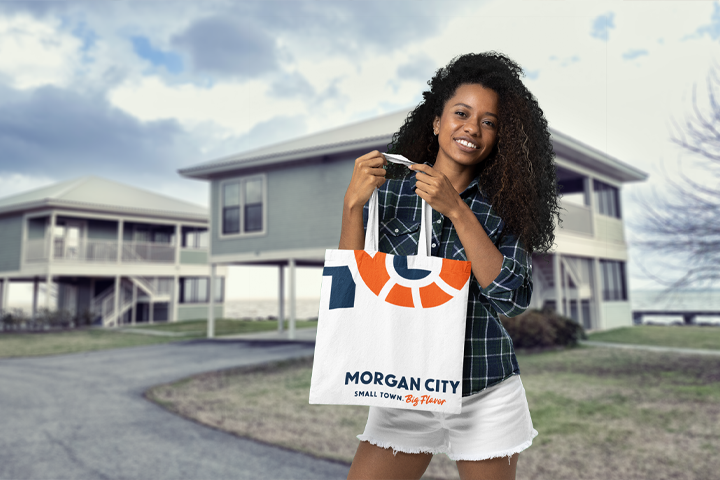
The slogan, "Small Town, Big Flavor," said the strategic finding in four words. A city whose people, cuisine, natural beauty, and accessibility made its experience as well-seasoned as a Louisiana shrimp boil.
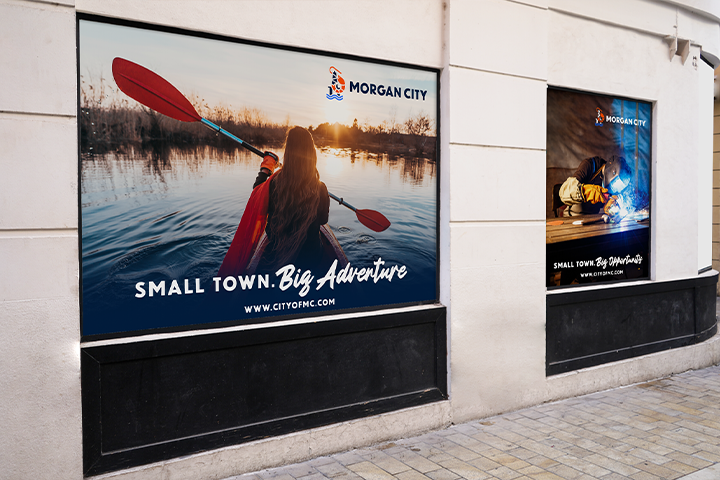
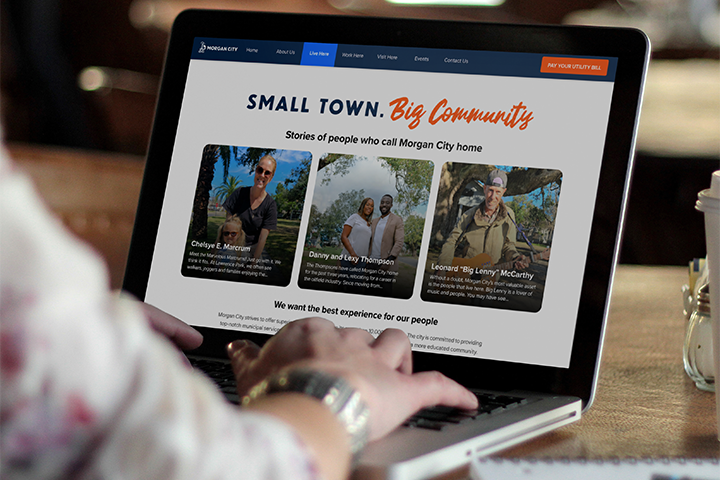
The system extended beyond a single line. Big Community for civic pride. Big Opportunity for economic development. Big Adventure for tourism. One voice, four applications, so every department had the right words for the right audience without breaking the brand.
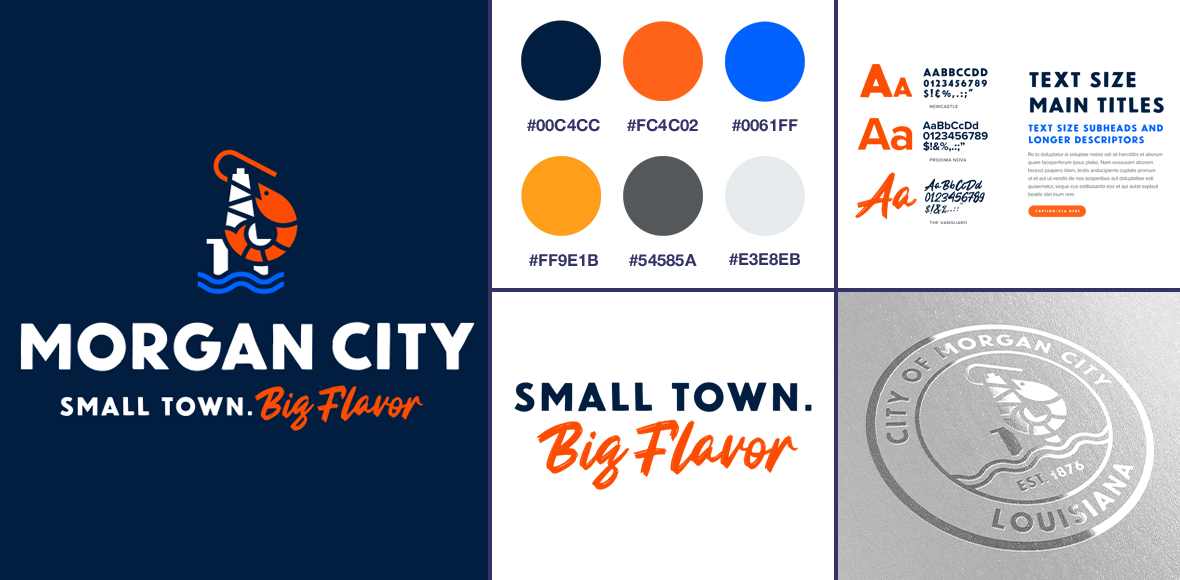
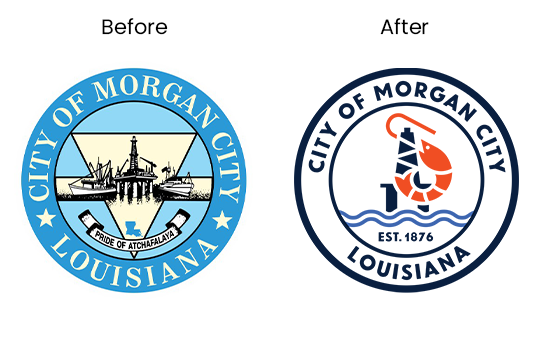
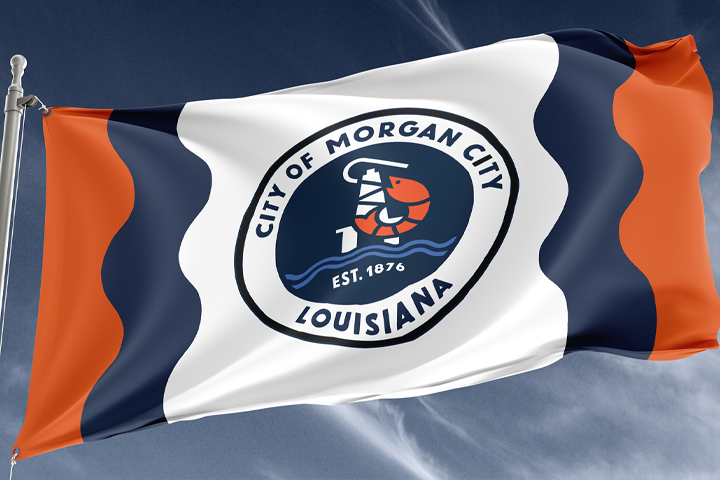
The old city seal couldn't keep up. It was outdated. It broke down at small sizes. It was unusable on a social avatar, a mobile screen, or anything smaller than a printed letterhead. The replacement was a full identity system, rooted in the two industries that built Morgan City: shrimp and petroleum, translated into modern visual language. Mark, typography, color, and application standards. All of it built to scale from a t-shirt to a city sign to an app icon. Real-world applications were conceptualized across signage, apparel, and city paraphernalia so the system would land on day one, not after a year of guesswork.
The seal upgrade. Formal lockup, before and after.
The full system. Primary lockup, slogan variations, and real-world applications.
Paper went out. The platform came in. Every form, every application, every PDF the city used got digitized and rebuilt inside the Geaux Civic platform, one operational backbone for citizen engagement. Residents could submit applications, request services, and reach the city from any device. The same platform doubled as the city's CRM, capturing every interaction in one place and automating the follow-up, routing, and reporting that used to live in a clerk's inbox. A public-facing AI assistant handled inquiries around the clock, trained on the city's services, processes, and voice.
Full methodology walkthrough from the original engagement, delivered under the Schola Designs & Consultation brand. The work shown here is now offered as Geaux Civic, the productized municipal platform built on the same methodology.
Runtime: 5 minutes · Covers research methodology, strategic positioning, identity development, and platform architecture.
Morgan City finally had one place to look. One way to speak. One system to work in. Departments stopped pulling from disconnected templates. Residents stopped filling out paper. The city now carried the identity and infrastructure of a place that could compete, for residents, for business, for visibility, not because it had gotten bigger, but because it had stopped operating like it was lost.
Most small and mid-sized cities face the same problem Morgan City did. An identity that hasn't been updated in decades. Messaging that lives on Facebook one day and a press release the next. Paper forms. A handful of disconnected tools. And no single team accountable for any of it. The longer it stays that way, the more ground the city loses.
That's the gap Geaux Civic was built to close. The work proven in Morgan City (community research, messaging, identity, and a platform to run it all) is now delivered as a single engagement. One team. One scope. One accountable partner.
For initiative leads and city decision-makers, that means modernizing your city isn't a four-vendor procurement headache. It's one project, one scope, one team, with a clear path from kickoff to launch.
This case study is the proof. The Readiness Assessment is the next step.
A no-cost 14-day evaluation that shows you where your city's identity and infrastructure stand today, and what it would take to move forward.
Request the Civic Readiness AuditNo commitment. No sales pressure. Built for city leaders, not vendors.